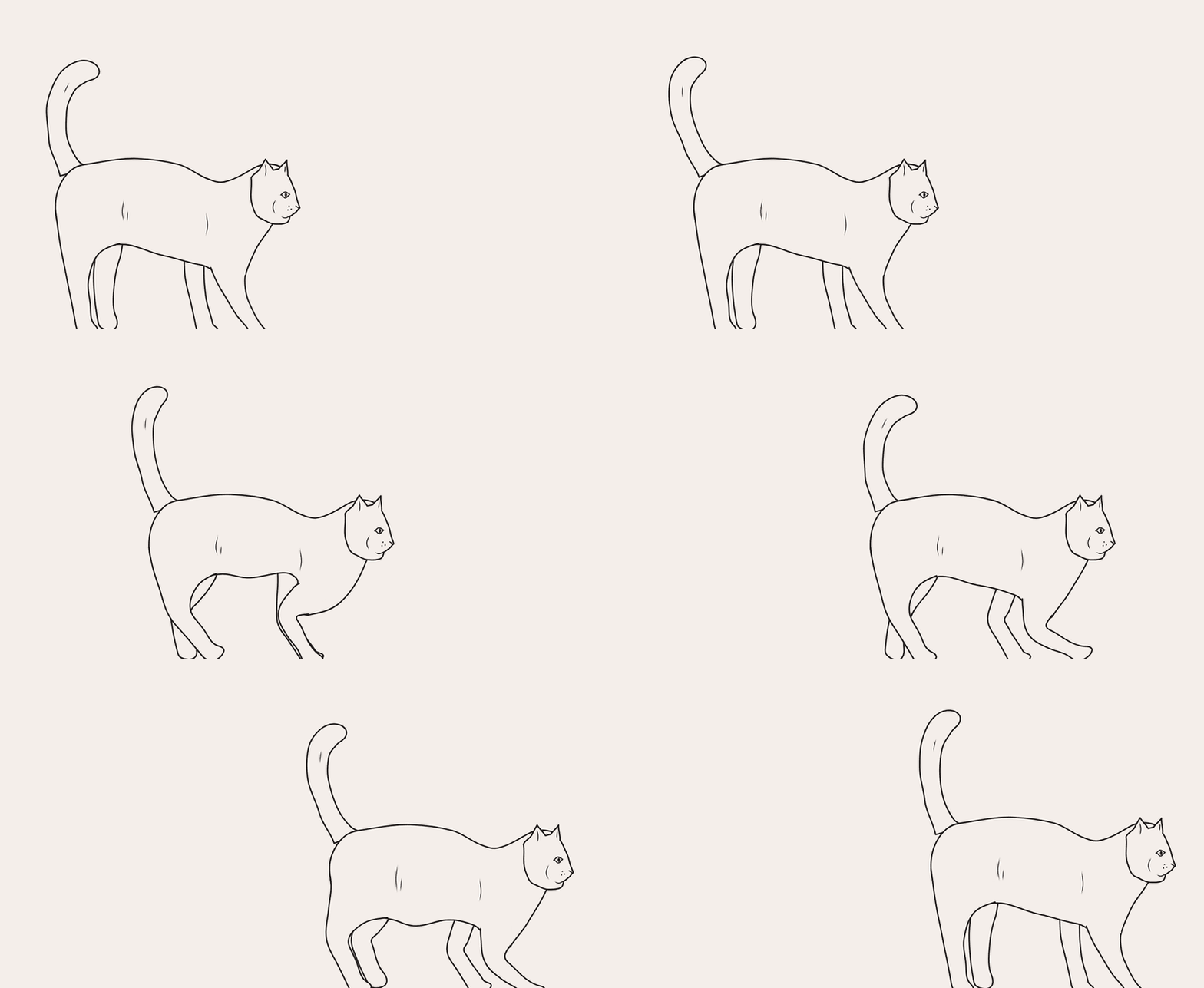
Two MCPs, two jobs
An MCP server (Model Context Protocol, the standard way an AI assistant uses a real tool instead of guessing) did the work here, and this cat went through two different ones:
- The SVG Lab MCP drew it. Opus 5.5 placed the outline anchor by anchor in the SVG Lab editor, with a reference line drawing for proportions and no auto-tracing. The SVG Lab MCP is available now in early access.
- The SVG Animate MCP moved it. It is the engine behind our upcoming animation platform. It is still in development, it is separate from the SVG Lab MCP, and it is coming soon.
Why moving a vector drawing usually breaks it
A vector drawing is a set of outlines. The quick way to animate a leg is to rotate the whole leg outline around the hip, like a paper cut-out on a pin. The trouble shows at the joint: the top of the leg swings out of the body, and an outline that used to flow from hip to paw suddenly has a step in it.
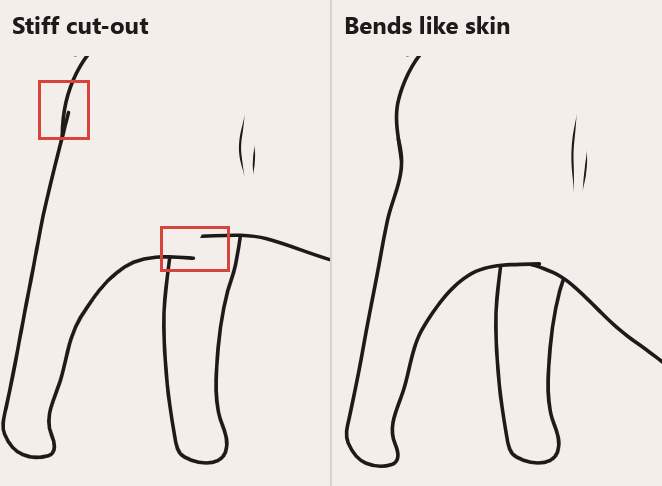
Cartoon animators solved this long ago with rigging. A rig is an invisible skeleton of bones inside the drawing. You move the bones, not the drawing, and the drawing follows like skin:
- Points in the middle of a bone follow that bone completely.
- Points near a joint follow both bones that meet there, a little of each, so the bend is gradual instead of a hinge.
- Points above the first joint stay with the body, which keeps a leg attached however far it swings.
One more detail made the difference for us: the body's own outline stretches a little with each upper leg, the way real skin does at a hip. Without it, the leg bends well while the body behind it stays rigid, and the seam shows. The SVG Animate MCP bends artwork with bones instead of rotating parts, so a limb's outline never splits from the body.
Why feet slide, and how to plant them
Watch almost any quick character animation and the feet skate: the body moves forward and the feet drift with it. Animators call it foot sliding, and nothing makes a walk look fake faster. It happens because the legs are animated by angle ("swing the leg 15 degrees") while the body travels at its own speed, and nothing ties the two together.
The fix turns the question around. Instead of deciding how far each leg rotates, you decide where each paw is on the ground, and the leg works out how to reach it. The technique is called inverse kinematics: given where a hand or paw must be, calculate the joint angles. Robot arms use it to reach a target, and game characters use it to keep their feet on stairs.
A walk then becomes a schedule for each paw:
- Plant the paw ahead of the hip.
- Hold it perfectly still while the body passes over it.
- Lift it once it is behind the hip, and swing it forward in a low arc.
- Plant it again, one step further on.
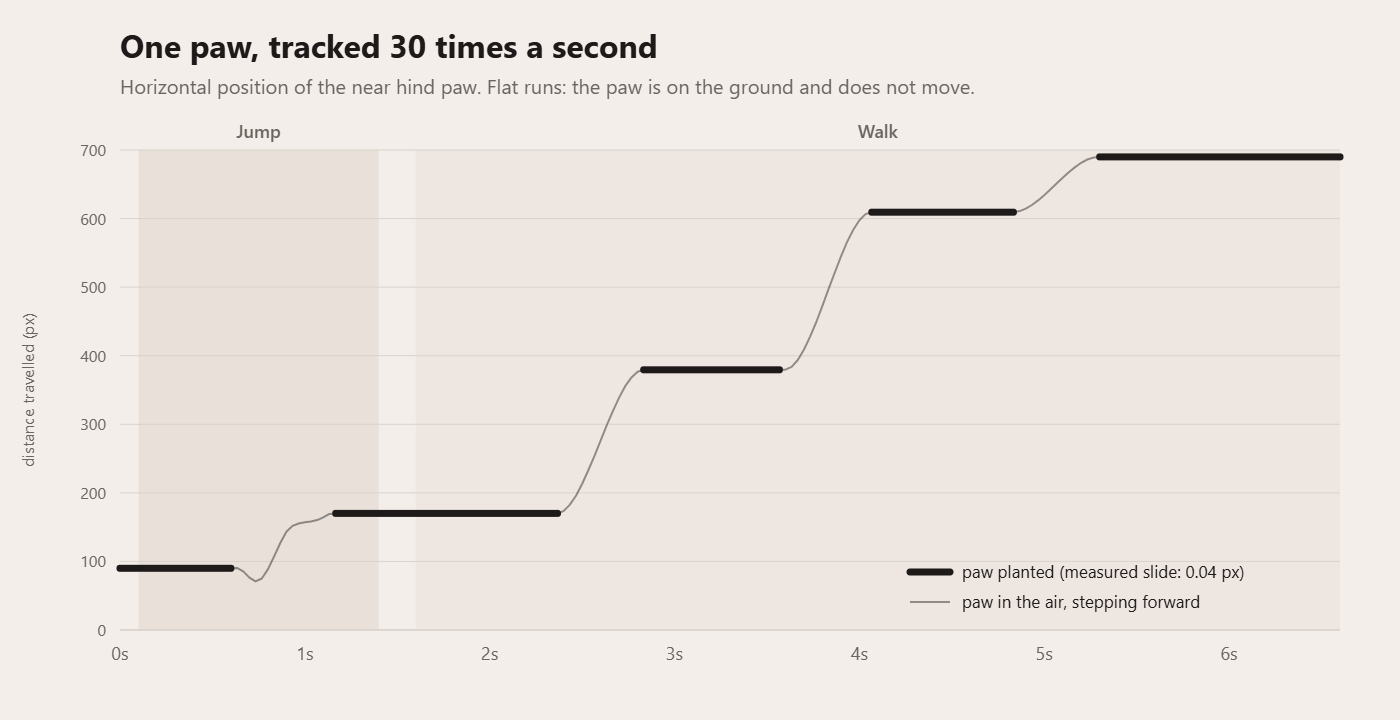
We measured every planted stretch of all four paws, across the jump and the walk. The largest drift of any planted paw was 0.04 pixels, less than one twentieth of a pixel. At that size, a still paw is still.
Starting and stopping matter too. The body speeds up from standing, cruises, then slows down, and the last step brings every paw back under the body, so the cat ends in the same pose it started in.
A walk has an order
Four legs can lift in many orders. Cats, like most four-legged animals at a walk, use a lateral sequence: a hind paw steps, then the front paw on the same side, then the other hind paw, then its front paw. At least two paws are always on the ground, which is what makes a walk look calm and supported.
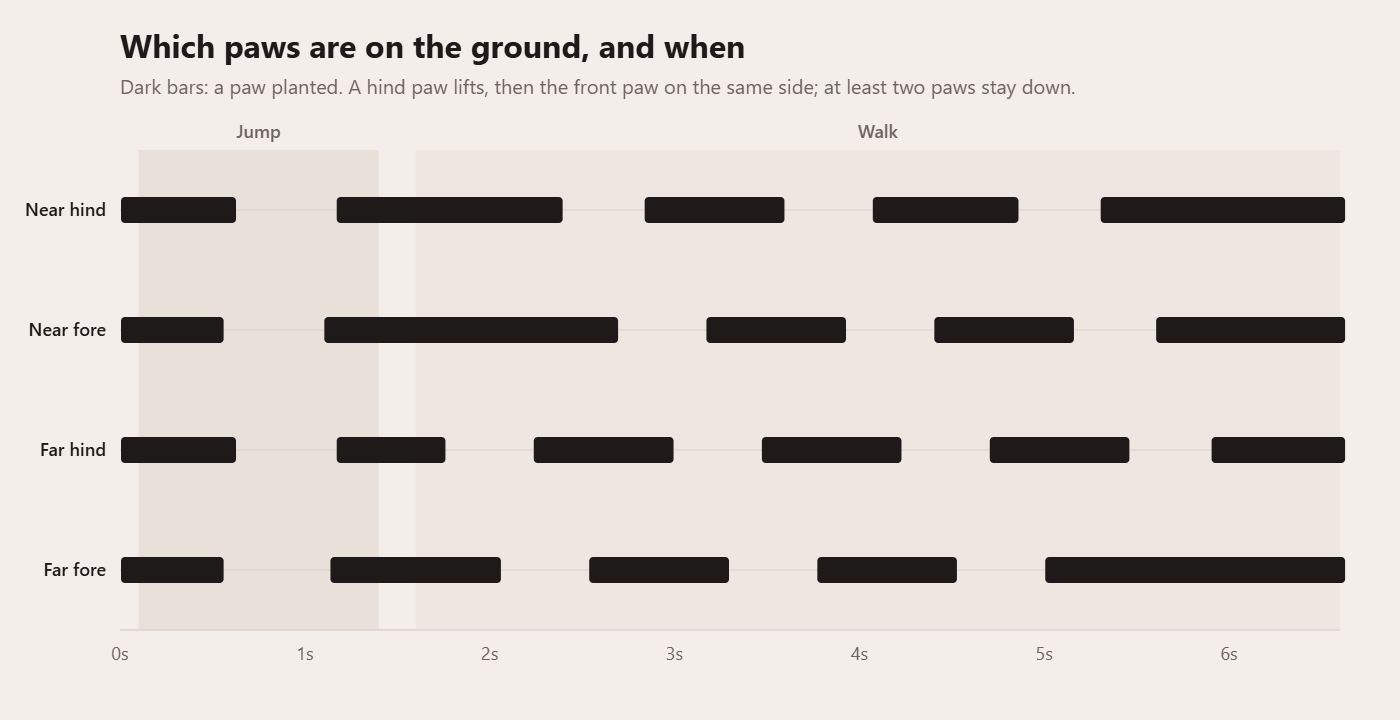
This chart caught a real mistake while we were writing this article. The walk had been lifting the paws in a diagonal order (a hind paw, then the front paw on the opposite side). It looked fine at a glance. The footfall data made it obvious, and a one-line fix brought the gait back to the way cats actually walk.
A jump obeys gravity
A jump is four moves in a row, and each one borrows from physics or from the classic principles of animation:
- Crouch first. Anticipation, a small move in the opposite direction, tells the viewer a big move is coming. The paws stay planted and the knees bend.
- Push off. The body accelerates upward and stretches, and the hind paws leave the ground last.
- Fly on a real arc. In the air the body follows a parabola, the path anything takes under constant gravity: fast going up, a moment of hang at the top, faster coming down. The hind legs trail, then tuck, and the front legs reach forward for the landing.
- Land and absorb. The front paws touch first, the body compresses (the "squash" of squash and stretch), and it settles back to standing.
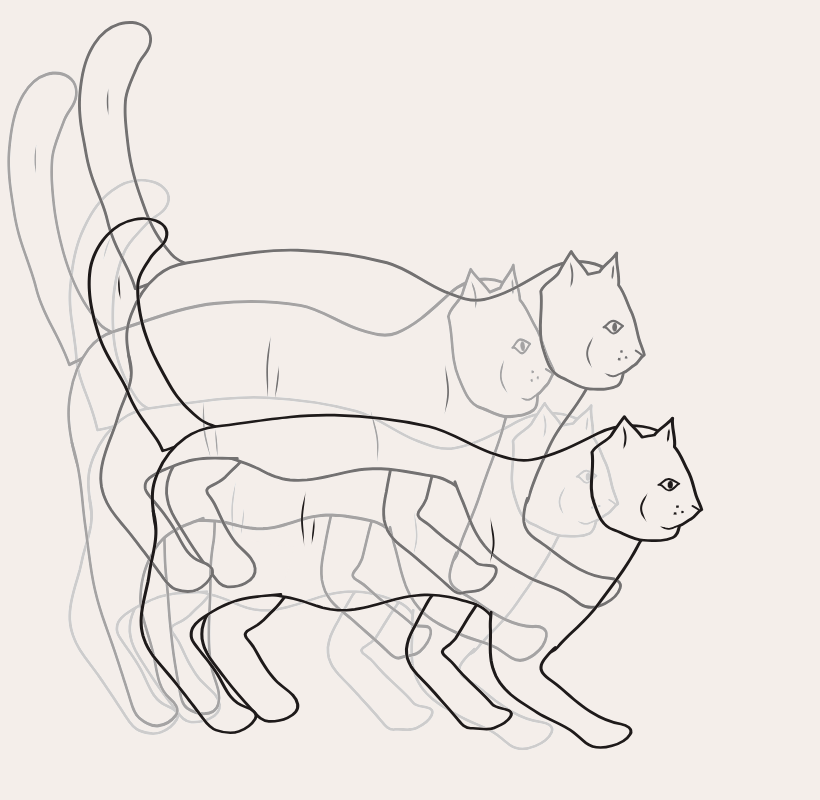
Two details are easy to miss and easy to feel. First, the speed at the end of the push must equal the speed at the start of the flight. An earlier version paused for a split second between the two, and you could feel a hitch at take-off even though no single frame looked wrong. Second, a paw in the air must never dip below the floor it is about to land on. Both are now rules the motion follows, not things we tune by eye.
Measure it, don't eyeball it
Every number in this article comes from measurement, not from watching the animation and deciding it looks right. That habit is what found the diagonal walk, the take-off hitch and the joint seams. If you animate characters yourself, these checks are worth copying:
- Sample the animation at a fixed rate, 30 or 60 times a second, not only at your keyframes.
- Track each foot's position against the ground, not against the body.
- Find the stretches where a foot is on the ground and measure how far it moves. Anything over half a pixel will show.
- Count the feet on the ground at every sample. A walk should never drop below two.
- Plot footfalls as lanes, like the chart above, and read the order.
- Zoom in on every joint at the most extreme poses, not at the resting pose.
What you can use today
The SVG Lab MCP, the one that drew this cat, is available now in early access: an AI assistant that supports MCP, such as Claude, can draw a design for you directly in the SVG Lab editor. Join the SVG Lab MCP early access. The SVG Animate MCP, the one that brought the cat to life, is in development and will arrive later with our animation platform.
Frequently asked questions
Can an AI model animate an SVG character?
Yes, when it drives a real animation engine instead of writing motion by hand. In our test, Opus 5.5 used the SVG Animate MCP, which is still in development, to rig a cat and make it jump and walk with planted paws. The model chooses the motion; the engine keeps it physically consistent and measures the result.
What is rigging in 2D animation?
Rigging adds an invisible skeleton of bones to a drawing. You animate the bones and the drawing bends with them like skin, which keeps joints connected and lets one rig perform many different motions.
Why do feet slide in walk animations?
Because the legs are rotated by angle while the body moves at its own speed, and nothing locks a planted foot to the ground. Planting the foot and solving the leg with inverse kinematics removes the slide; in our cat, no planted paw moved more than 0.04 pixels.
How does a cat walk?
At a walk, cats use a lateral sequence: a hind paw, then the front paw on the same side, then the other hind paw and its front paw. At least two paws are always on the ground.
Can I use the SVG Animate MCP today?
Not yet. It is in development and will launch later with our animation platform. The SVG Lab MCP, which drew this cat, is available now in early access at svglab.app/mcp-early-access.
Was the cat traced from an image?
No. Opus 5.5 drew it through the SVG Lab MCP, placing each anchor and curve in the SVG Lab editor, with a reference line drawing for proportions. SVG Lab keeps every part as a separate, editable vector shape, which is what made the cat possible to rig.